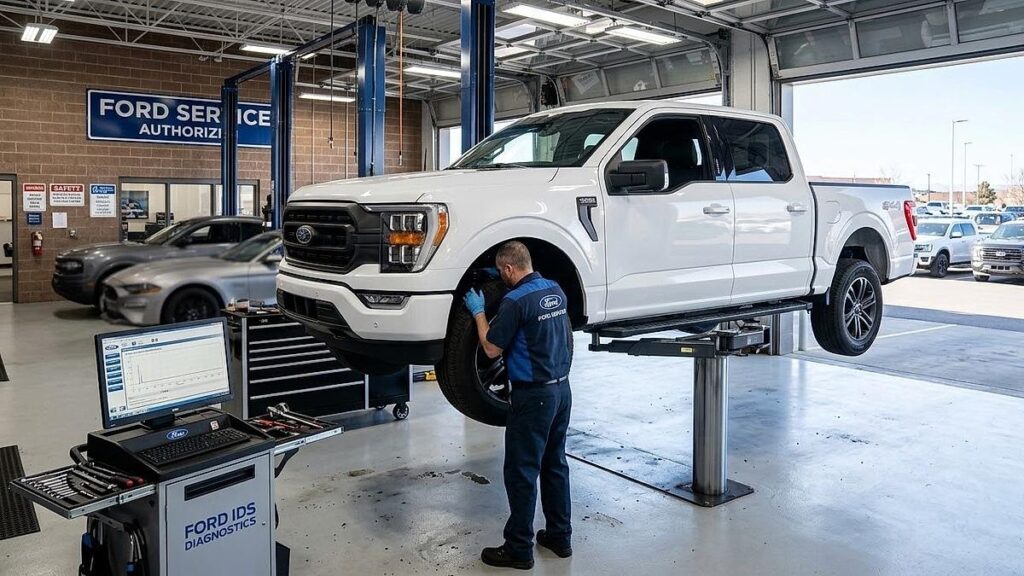
The Ford F-150 and Chevrolet Silverado are popular full-size pickup trucks used for daily transportation, work, towing, and recreational driving. Like any vehicle, they require regular maintenance to operate reliably and help prevent avoidable repairs.
Although the two trucks have different configurations across their model years, many general maintenance principles apply to both. Understanding which components need attention and recognizing early warning signs can help you maintain your truck more effectively.
Engine oil lubricates moving components, helps manage heat, and carries contaminants toward the filtration system. Over time, oil degrades and accumulates debris.
Check your owner’s manual for the recommended oil specification and service interval for your exact engine and model year. Some newer trucks use oil-life monitoring systems, but the manufacturer’s instructions should remain your primary guide.
When changing the oil, use the specified oil grade and a compatible, quality oil filter.
Signs that your vehicle may need attention include:
An oil-pressure warning light.
Unusual engine noises.
Visible oil leaks.
Oil levels below the recommended range.
If the oil-pressure warning light comes on while the engine is running, stop safely and follow the manufacturer’s guidance rather than continuing to drive.
Your truck typically uses an engine air filter to help keep dust and debris out of the engine. Many models also have a cabin air filter to help filter particles entering the passenger compartment.
A clogged engine air filter can restrict airflow, while a dirty cabin filter can reduce ventilation performance.
Inspect both filters according to the maintenance schedule and driving conditions. Trucks frequently driven on dusty roads or construction sites may need more frequent inspections.
When buying replacements, verify the correct filter for your truck’s model year, engine, and configuration.
Your braking system is one of the most important safety systems on your truck. Regular inspection helps identify wear before it becomes a more serious problem.
Pay attention to:
Squealing, grinding, or unusual braking noises.
Vibrations when braking.
Changes in pedal feel.
Brake warning lights.
Uneven brake-pad or rotor wear identified during inspection.
Brake pads, rotors, calipers, and related hardware should be inspected and replaced as required. Use components that meet the vehicle’s specifications, particularly if your truck frequently carries heavy loads or tows trailers.
If braking performance changes suddenly, have the vehicle inspected promptly.
Tires affect traction, braking, handling, and fuel efficiency. Pickup trucks may carry different loads and operate on a wider variety of surfaces than passenger cars, making tire maintenance especially important.
Check tire pressure when the tires are cold and follow the pressure listed on the vehicle’s tire-information label. Do not rely solely on the maximum pressure printed on the tire sidewall.
You should also:
Inspect the tread for excessive or uneven wear.
Look for cuts, bulges, or embedded objects.
Rotate tires according to the manufacturer’s schedule.
Check alignment if the truck pulls to one side.
Confirm that tires have suitable load and speed ratings.
If your truck is used for towing, verify the tire-pressure and loading requirements for that application.
A weak battery can cause slow starting, intermittent electrical problems, and unexpected breakdowns.
Inspect the battery terminals for corrosion and check that connections are secure. Have the battery and charging system tested if you notice repeated starting difficulties, dim lights, or electrical warnings.
Battery specifications vary across model years and engine configurations, so confirm the correct replacement before purchasing.
Engine coolant, transmission fluid, brake fluid, and other vehicle fluids must be maintained according to the manufacturer’s specifications.
Low fluid levels or leaks can indicate underlying problems. Check fluid levels only using the procedures specified in your owner’s manual, as some systems require particular temperatures or operating conditions.
Never open a hot cooling system. Allow the engine to cool and follow the manufacturer’s safety instructions before inspecting coolant components.
Pickup trucks regularly exposed to rough roads, heavy loads, or towing can experience wear in suspension and steering components.
Warning signs may include:
Knocking sounds over bumps.
Excessive bouncing.
Uneven tire wear.
Steering looseness.
Changes in handling.
Visible damage or fluid leakage from suspension components.
Have unusual symptoms inspected by a qualified technician. Replacement parts should match the truck’s exact configuration, especially where suspension height, payload, or towing requirements differ.
Maintenance is only effective when replacement components are suitable for the vehicle. A part that fits one Ford F-150 or Chevrolet Silverado may not fit every model year or engine variant.
Before purchasing parts, verify the vehicle identification number, engine, model year, original part number, and any relevant trim or drivetrain details.
OEM parts can be appropriate when you want original-specification replacements. Quality aftermarket parts may provide additional price and brand choices, provided they meet the required specifications.
Avoid choosing a component based on appearance alone.
Record oil changes, filter replacements, brake inspections, tire rotations, battery replacements, and other service work. Keeping receipts and part numbers can help you track maintenance and make future ordering easier.
A consistent service history also helps mechanics understand previous repairs and identify recurring issues.
Regular maintenance helps you identify wear early, maintain safe operation, and reduce the risk of unexpected failures. Always follow the service recommendations for your exact vehicle rather than relying on a single schedule for every truck.
At EliteSpare Partz, we help customers source OEM and aftermarket parts for vehicles including the Ford F-150 and Chevrolet Silverado. Before placing an order, verify compatibility so you can select components suited to your truck.
Need a replacement part for your pickup? Browse our available automotive parts or contact our team for assistance identifying the right component.